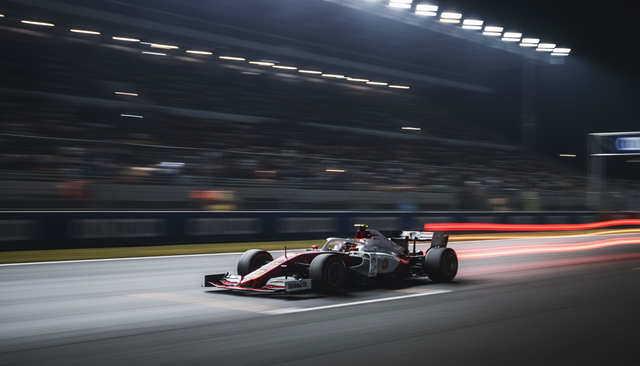
Max Verstappen did not win at Spa-Francorchamps. He did not dominate. He did not look untouchable. And somehow, that makes his Belgian Grand Prix podium infinitely more terrifying for the rest of the paddock.
For years, Spa was the sacred ground where Max Verstappen made Formula 1 look unfair. Long straights, brutal braking zones, and the sheer, unyielding commitment through Eau Rouge and Raidillon—it was a layout designed to reward aggression and punish hesitation. It was, by every definition, Max territory.
So when Verstappen crosses the line in P3, the lazy instinct is to write it off as a defeat.
That misses the point entirely. This wasn't a story of a champion sliding backward. It was a masterclass in high-yield survival.
The Death of Automatic Authority
The era of Red Bull walking into a race weekend with automatic authority is officially over. The RB22 isn't the aerodynamic scalpel that allowed Verstappen to turn a 44-lap Grand Prix into a private time trial. The grid has caught up, the margins have evaporated, and the fear factor has been dented.
Kimi Antonelli is operating with championship authority. Charles Leclerc is converting Ferrari’s corner-speed weapon into trophies. Lewis Hamilton is a constant threat in red, and George Russell’s sudden DNF at Spa has sent shockwaves through the standings.
Yet, despite driving a compromised machine that refuses to settle in its setup window, Verstappen still found a way onto the podium.
Complicated Cars Reveal Generational Talent
There is a simple axiom in modern motorsport: bad cars expose weak drivers, great cars flatter decent ones, but complicated cars reveal generational icons.
Verstappen isn't managing a title lead from a comfortable throne anymore—he is stealing points from weekends that should be total disasters. He is keeping the scoreboard ticking, refusing to fade into the midfield, and forcing every rival pit wall to spend their Sunday afternoon staring nervously at his sector times.
This is ugly, unglamorous champion behavior. It’s taking third place when victory is mathematically impossible, staying close enough to be dangerous, and keeping the championship pulse alive until the factory brings an answer.
The Two-Tenths Nightmare
This P3 should worry Red Bull’s engineering team, but it should outright terrify Mercedes and Ferrari.
Verstappen doesn't need a car that is half a second faster than the field anymore. He doesn't need a flawless balance window or absolute comfort. He just needs a sniff. A micro-opening in strategy, a timely Safety Car restart, or two extra tenths of aerodynamic efficiency from an upgrade package.
Give him that tiny margin, and a driver surviving on P3s instantly morphs into a race-winning nightmare.
The Verdict: The Prelude to the Storm
If Red Bull wants to defend its status, third-place finishes cannot become the permanent ceiling. Verstappen can hide engineering deficiencies for a few race weekends, but he cannot erase them forever. Eventually, the hardware must meet the driver's elite standard.
Spa wasn't a celebration of Red Bull dominance—it was proof of fierce, stubborn resistance. And in Formula 1, resistance is almost always the prelude to a counter-attack.
The rest of the grid should enjoy this limited, frustrated version of Verstappen while they can. Because if Milton Keynes hands him a true weapon after the summer break, this quiet P3 at Spa will be remembered as the calm before the storm.
Given that Verstappen is keeping his title hopes alive purely through elite damage limitation while Antonelli and Leclerc trade race wins, do you think Red Bull's upcoming development package will give Max the two tenths he needs to turn these survival podiums back into a championship streak?